
New Growth: Jadah Johnson
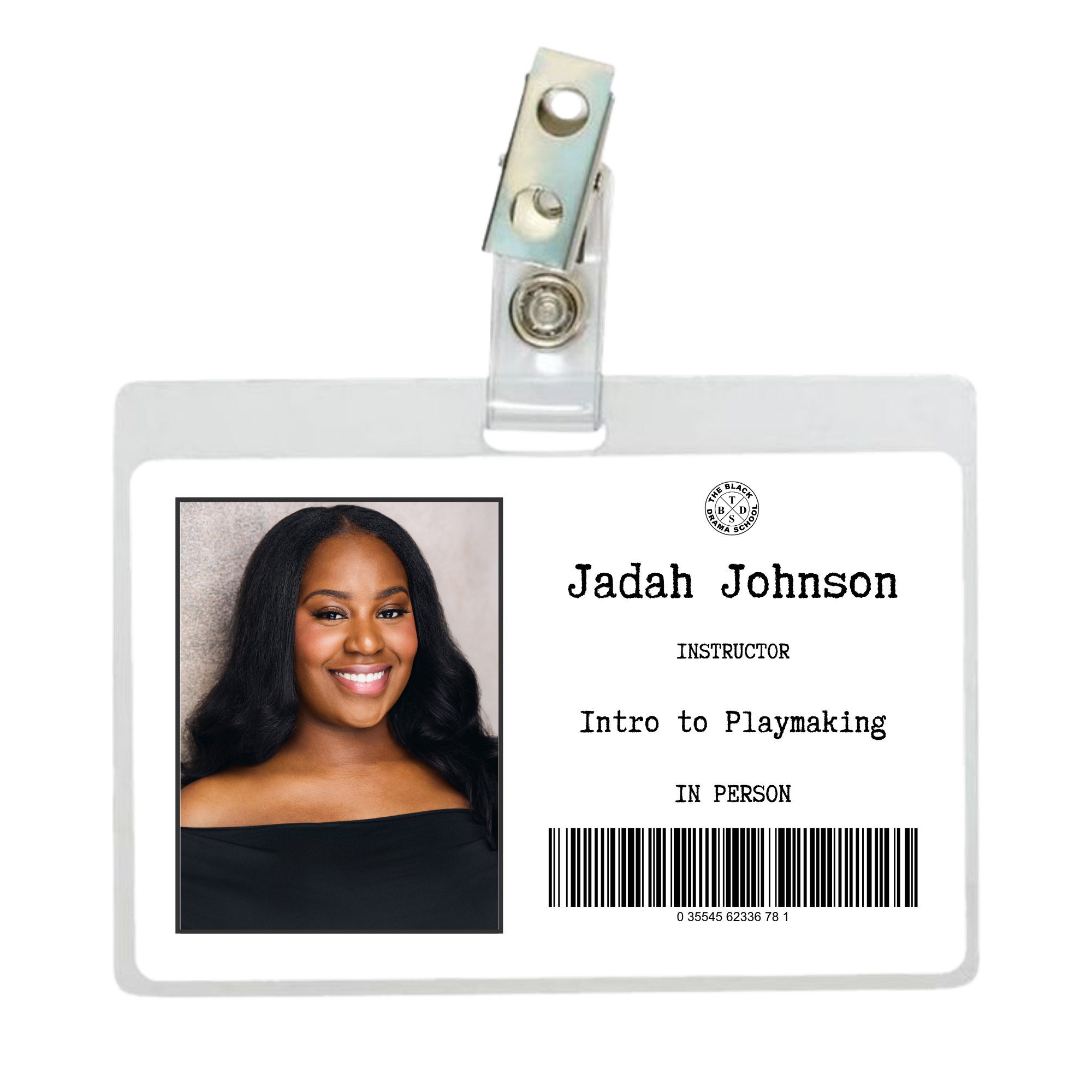
Meet Jadah (she/her)
This interview was conducted July 20, 2026
Korinn Annette Jefferies: Tell me how you got started doing theater.
Jadah Johnson: Ooh, I had an 8th grade English teacher, her name was Ms.Boykin. She was Black, and she kept telling me when I got to high school, she was like, “you need to join the drama club. You need to join the drama club.” And I was just like, “No, I would never join the drama club. Like, what is that? Like, no, no, no.” And she would like, say it to me a lot. So then I got to high school that following year. Kind of had, like, a rough first year, and then I remember that seed she planted in to me, and she was like, you should join the drama club. And I joined the drama club, my 10th grade year, and I fell in love with it. Um, it was like the first thing I had found that I was like really good at, like storytelling and speaking in front of people. And it felt like a superpower. And so, I did all these, like, competitions, I was in, like, school plays, and I decided that I wanted to further pursue it, and initially, I went to this very, very small school in Florida called Florida School of the Arts, where I really, like, learned everything that I wanted to learn about acting. So that's how I got started.
KAJ: So would you say that acting is your favorite role in the theater?
JJ: Um, it's changing. Acting, for me, is very spiritual, is very therapeutic for me. But I also have found that, I'm good at teaching and like mentoring people and almost like uplifting people. So I feel like that role is changing, like, I don't feel like, oh, acting is the one thing I can do. I think that I can do a multitude of things. I think acting is just one avenue that I can heal people through, but I can also heal people through other ways.
KAJ: How do you define black drama?
“Black drama is my life. Black drama is expansive.”
JJ: Ooh, Black drama. Black drama is my life. Black drama is expansive. It is raw. It is uncut. It is freeing. It is healing. I would define it as Black spiritual beings, having a human experience on stage, in the black box, in the theater. That's how I would that's how I would describe it.
KAJ: What are you working on right now?
JJ: I am revisiting my one woman show and just going through and like rearranging it, like looking at the script and figuring out, which I feel like I need help with it, actually, figuring out how I could better tell that story… It's called “The Rejected Will Be Respected” and it's about a young Black woman who works at the Florida hospital. She's a nurse, and she is trying to navigate in this very predominantly white space, and she's having a hard time. So while she's working there, you know, they're making little, subtle, like, microaggressive comments, like, maybe certain things about how she speaks certain words or, constantly undermining her in her field, almost as if she's not qualified to be a nurse. She's having a really, really hard time. Like the job is really taking a lot out of her spiritually, emotionally, physically. So this character, she really believes in ancestor veneration. She has a strong relationship with her ancestors, and she has an altar for them. And what ends up happening is that they end up taking possession over her. And so then at the end… she has learned about where she comes from and about racism and how all of this is bigger than what we see on the surface. It's not just, you know, white people not liking black people. It is spiritual warfare that our ancestors have been through for centuries.
And yeah, and I want to rework it because there were certain parts that I felt like was rushed or like certain parts that I felt like maybe needed more clarity. But yeah, that that's what it's about.
KAJ: I love the ancestor involvement and the spiritual element of it all. I think that's like really nice touch that you're able to bring all of that together. What on your resume are you most proud of?
JJ: I would have to say— this is so weird—but the role that I did in The Wolves [at Playmakers]. I played ‘Number 8.’ That was a big, big challenge and hurdle for me. I felt like as an actor, it was very challenging because I felt like the material was very white, and I felt like at the time, like, I didn't know how to connect with it. So it was really challenging and I had to work really hard and I found that the way in through every role, there's always something to empathize with. And I had to empathize with that little girl if she was 16. She had lost her mother, to cancer, and my mother schizophrenic. So, I've kind of—even though my mom is still here in the present—I've kind of like, lost my mom in a sense because she’s not all the way there mentally, and I had to find a way to grow up and like deal with that. And I felt like the character, Number 8, the way she was handling it was very different than how I would handle it, but then I had to find where I resonated and where I empathized with her, and I'm so proud of what I created with that role. Because everybody was like, “Oh my God, like, I can't believe, like, that was you.” You know, coming from where I come from, you know, 28 years old doing that role, like, that was really, really hard. And I'm really, really proud of that role.
KAJ: What is like your dream drama class to either teach or take?
JJ: I always wanted to take, like, a August Wilson workshop class. I feel like growing up, especially like in high school, maybe early college, I felt like I didn't get that training, even though it's like the number one black playwright that everyone knows and blah, blah, blah, blah, blah. But when you really look at his writing, what he wrote about and how he wrote, it's like Shakespeare. Like, it's, it's, the language is so rich that I wish I would have got more training on that because those are the roles I probably will play versus, you know, your classical theater that we have to train in and learn. I feel like I would have loved to have taken a class like that. Um, to really live in the experiences of those characters, and I know like, yeah, some of them are older (most of them are older) but still, like, how he wrote, I feel like there was nobody in his time writing like that. And I wish I would have gotten somebody, like, specially trained in that to teach me.
“There is no failure.
I wish somebody would have instilled that in me, and that’s what I want to instill in my students.”
KAJ: So is there anything that you want your students to know before joining you in class?
JJ: I want my students to know that this is a safe space. You are free to be yourself. I am here on your side. I wanna see you win. And this is the time to just go balls to the wall and just, you know, try different things. There's no failure. I wish somebody would have instilled that in me, and that's what I want to instill in my students.
Jadah Johnson is teaching Improv Games for Fall 2026 at the Durham Arts Council.
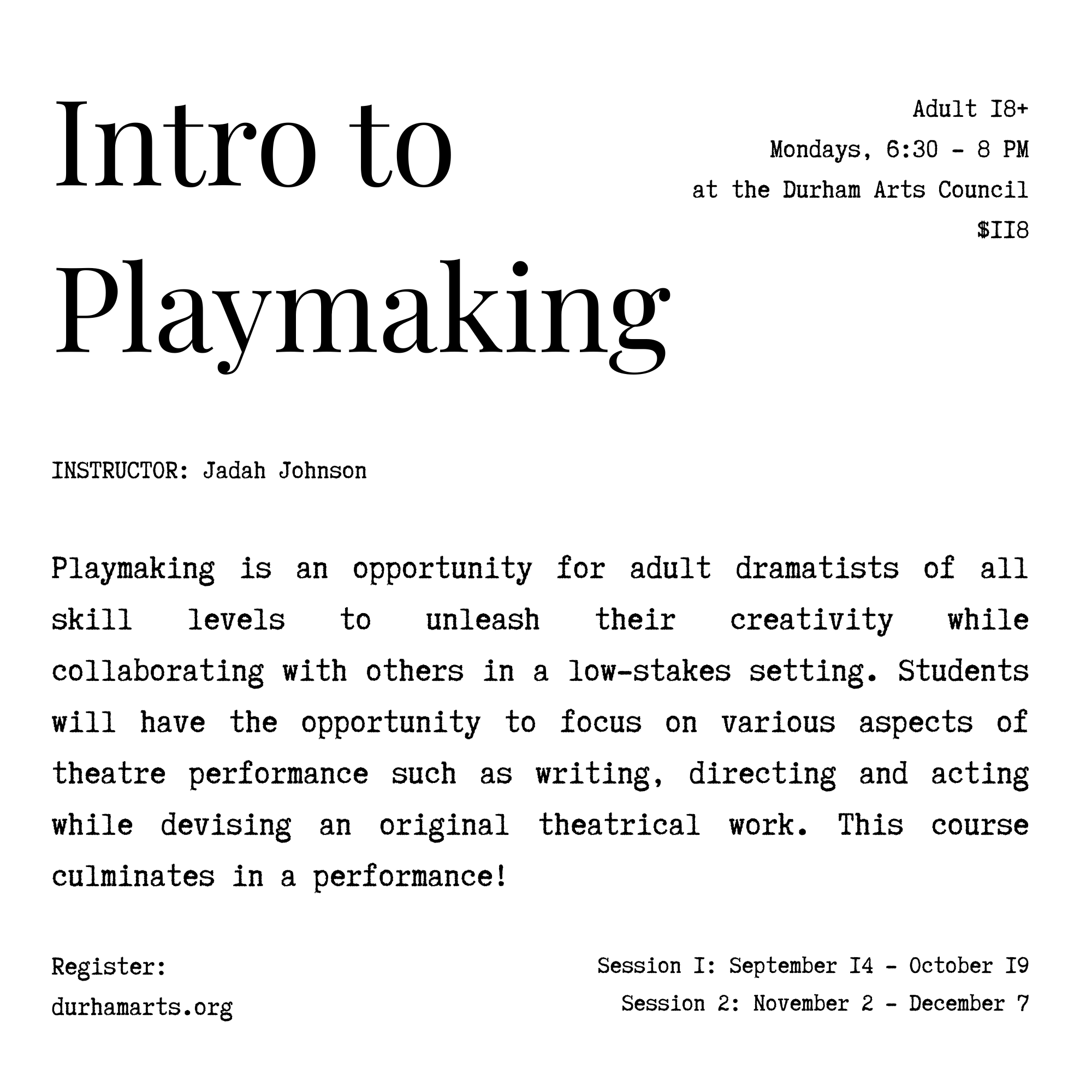
Registration closes October 26, 2026.